

A Beatrix Potter Spring
Seven ways to slow down time.
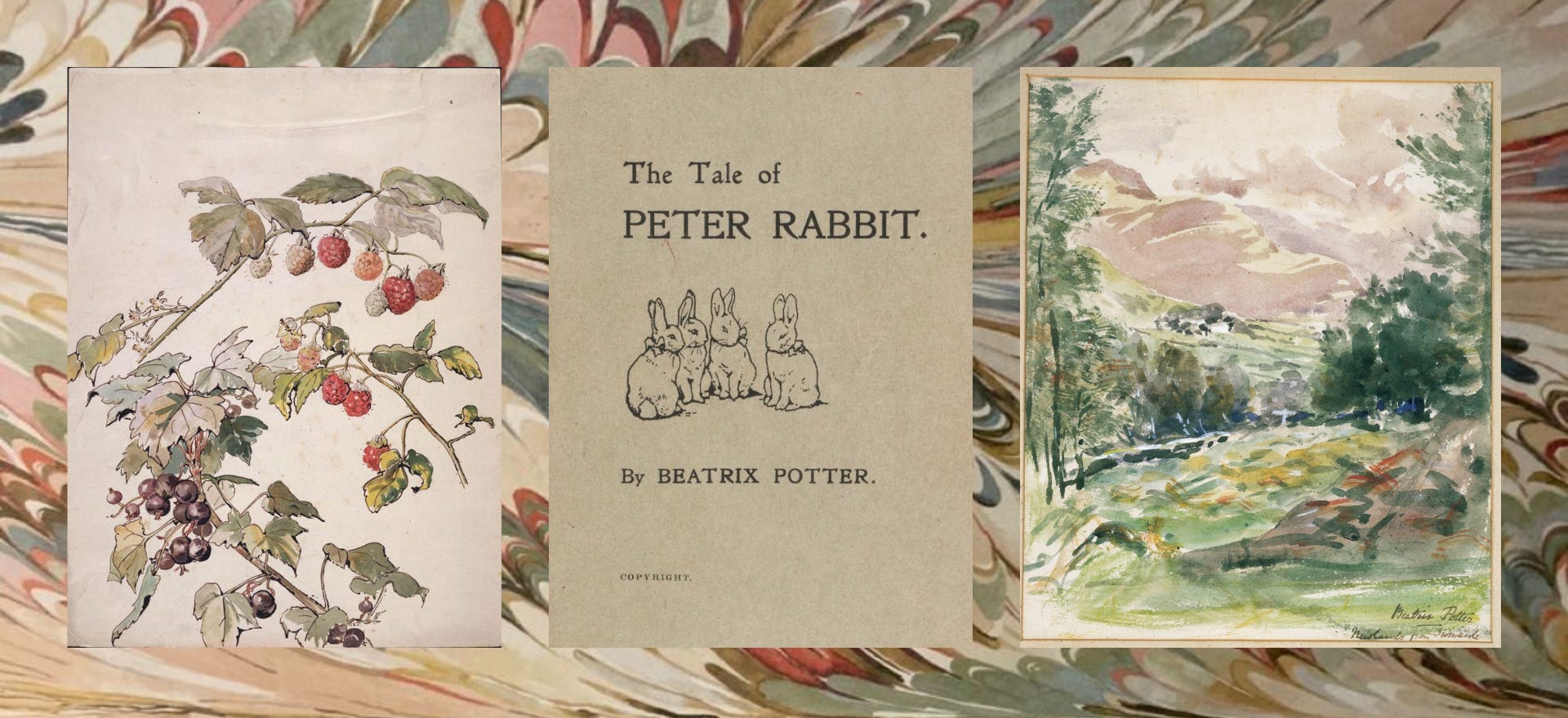
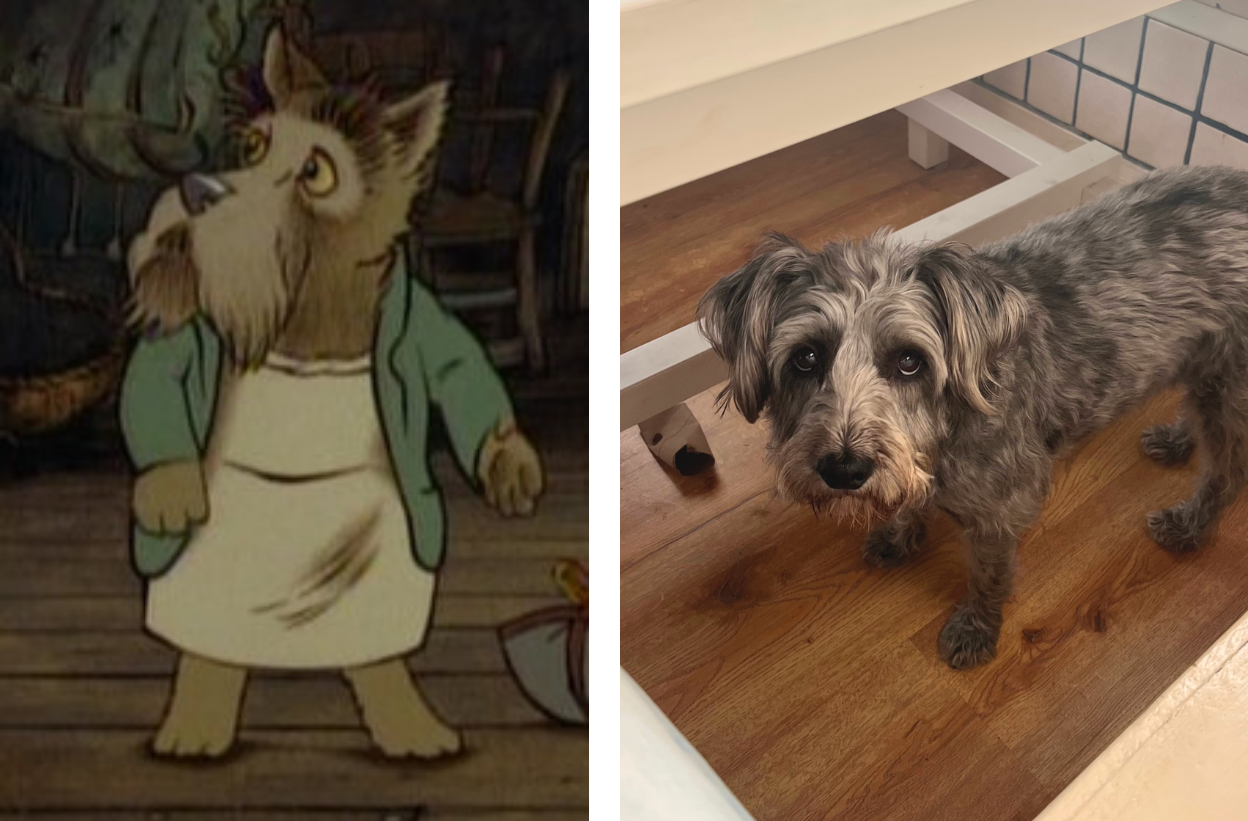
When I was a little girl, I obsessively watched a Beatrix Potter VHS tape that had animated versions of her stories, like The Tale of Tom Kitten. One particular story I still think about is the Tale of Samuel Whiskers. Samuel and his wife Anna Maria, two humongous cat-sized rats, kidnap little Tom and attempt to turn him into a “roly poly pudding.” I’d feel panic rising in my throat as I watched them cover Tom in butter and tuck him into dough, sealing the sides with a rolling pin. That dread would instantly melt into relief as soon as I saw Mr. Joiner, a Scottish terrier, and his wheelbarrow of tools coming to the rescue.
I loved the stories, but what I remember most vividly is how mesmerized I was by the introduction sequence of this tape, where an actress portraying a young Beatrix Potter paints plein air on the property of her Lake District home flanked by all her animal friends. When she’s suddenly caught in a summer downpour, she packs up her supplies and runs back home with her dog to the warmth of her perfect little cottage. There, she makes herself a cup of tea and catches up on her correspondence. I watched this wide-eyed as a child, enveloped in the dry and unforgiving heat of Southern California, a sharp contrast from the lush landscapes of the English countryside, and wished someday to live a life just like hers.


I have yet to realize my dream of living in the English countryside, but I always find myself returning to the heart of that wish, which is really just a desire to live freely, among nature, surrounded by my animals, with ample time and space to let my creativity and imagination run rampant. That was my dream as a little girl, and it remains my dream today.
For now, I seek ways to suffuse my life in Los Angeles with the naturalist’s perspective. It is my way of attempting to answer a question that has likely been on all of our minds at one time or another: how do you find stillness in a world that runs much too fast? How can you slow down enough to enjoy the precious gift of time in a world, by design, that never leaves enough space for that to happen?
1. Befriend some animals.
I talk to my dogs Rosie and Hank probably as much as I talk to my husband. I love to give them a good scratch on their heads and stare into their warm chocolate-brown eyes, watching their ears lift slightly in recognition when I say I love you. There is a small rabbit who occasionally makes herself known in our neighborhood. Sometimes I’ll catch a glimpse of her nervously chewing on a flower in our front yard before she darts back into the dark unknown of our neighbor’s hedges. I’m still trying to convince our neighborhood crows to trust me and bring me shiny objects. Once I lured them all onto our front yard using dog treats (our neighbors definitely think I am unwell), but my dogs caught sight of them and lost their minds and scared them all away. Baby steps.
I highly recommend investing in a bug-catcher. Yes—one of those plastic ones for kids with the magnifying glasses. I have one and I love it because I hate killing bugs. I’ve never understood the logic behind squishing bugs.1 Spider guts are so much worse than the actual spider, and you’re saving an important part of our ecosystem. They eat all the other gross insects you don’t want to deal with. They eat mosquitos! We hate those guys! Spiders also adapt to your routines which I find so polite and endearing.
2. Plant a garden.
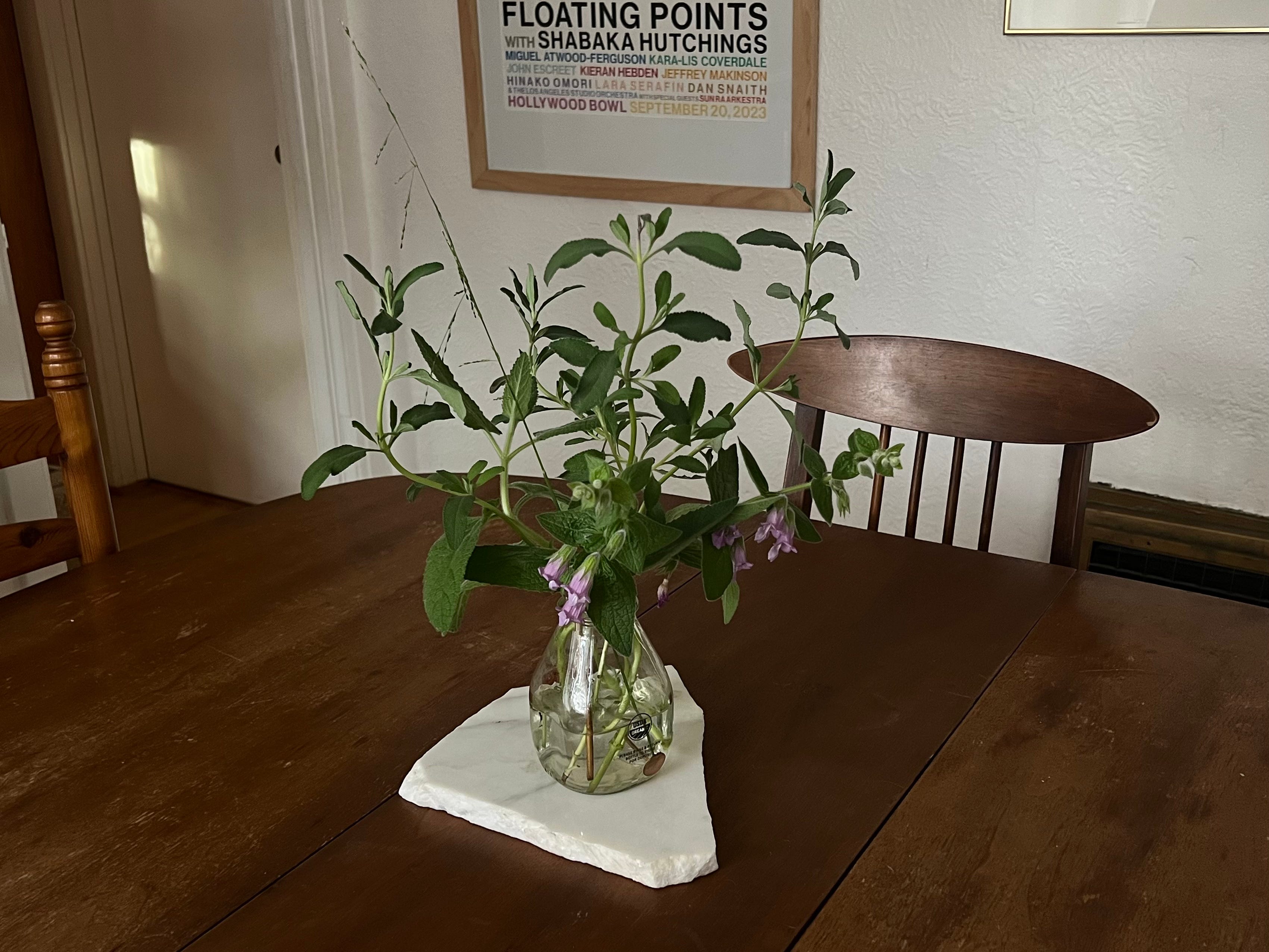
A few weeks ago I ordered nigella, rudbeckia, cupcake cosmos, and catnip seeds (to lure cats, because we have a rat problem—I can’t be having a Samuel Whiskers situation on our property). The joy I’ve felt watching those seedlings sprout is unparalleled. Gardening is slow and demanding work. You are bent over soil for hours in the sun, lifting and pulling and pruning and tilling. But each time I emerge from it red-cheeked and filthy I am reminded of how essential that proximity to soil is for my wellbeing. Every time I lovingly tend to my little patch, I am acutely aware of my place in nature. Man has tried to deny and conquer nature for thousands of years. I try to be a steward, living in tandem with it as much as I can. This is keeping me hopeful about the future in the present moment.
3. Do something you never got to do as a child.
What was something you were never allowed you to do as a child? I know for many people it was eating in their room. For me, it was jumping on a trampoline. My mother was terrified by the horror stories she’d hear on the news and was worried I’d break my neck if I ever set foot on one. I was in my early twenties when I finally experienced the joy of a trampoline.
What is your trampoline? Dessert before dinner? Permission to make a mess and not immediately clean it up? Treating each morning like a game of dress-up and make-believe when you choose your outfit for the day? Find it and savor it.
4. Become a luddite.
Pick one day a week that remains sacred and refuse to engage in a specified list of modern technologies. It is important to figure out what triggers you the most, because otherwise it won’t be useful. I know people who genuinely do not struggle to curb their phone use. They are anomalies, but they exist. They do, however, struggle to limit their reality television intake, and I get it—I’m addicted to The Traitors (US and UK). Reality TV only becomes a problem when you’re using it to avoid your feelings, or that book you’ve been meaning to read, or that creative project you haven’t started yet. It is important to give your mind time and space to wander, and it very rarely has the opportunity to do that before the glow of a screen.
I also try to force myself to do something in the least productive way possible at least once a week. Sometimes I will stand in the longest line at the grocery store just because. We need to experience friction sometimes. Not everything should be glossy and streamlined and seamless. This is how you build the tolerance to stumble through the discomfort of a creative practice, or to learn affect and emotion regulation. It is good for your brain and your nervous system, and doing it regularly teaches your body that slowness and non-productivity are safe.
5. Develop a journaling practice.
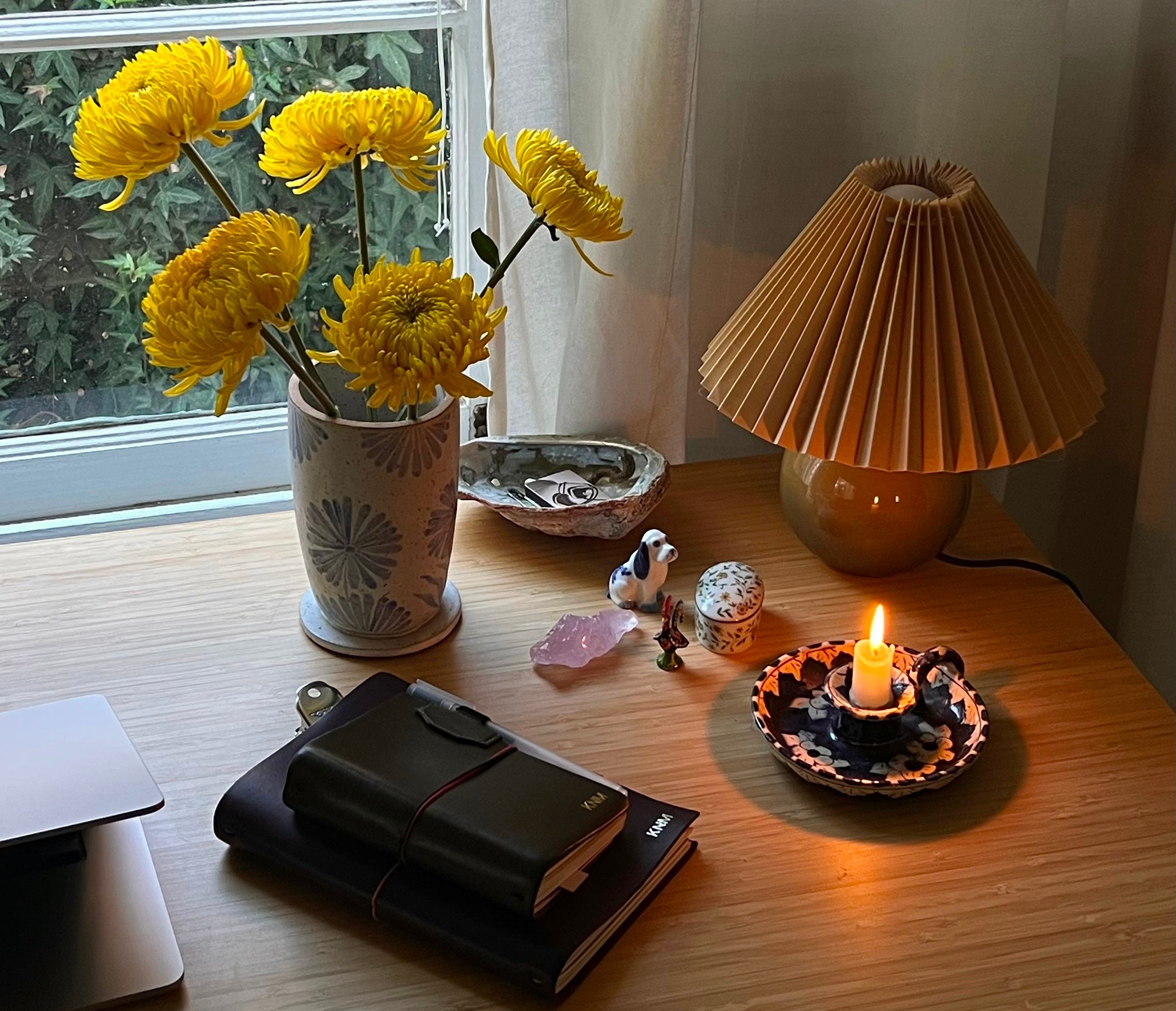
It’s one of the most recommended self-care and mental health practices, yes. But it comes so highly recommended for good reason, and that is because it works. Most of the criticism for journaling is that you don’t need to write things down when you’ve already thought them through. That is not true. When you think about something, the thought process is cyclical. It is rumination, not constructive thinking. Writing your thoughts down alchemizes the nebulousness, stringing the abstract fragments into complete sentences so that they take up less space in your precious mind, which expands your capacity for creativity and resilience. Even if you think you’ve thought it all through, just try writing it down. I guarantee you will come away with something new.
6. Do something just for yourself.
Make a date with yourself once a week, Julia Cameron style. I’ll be the first to admit I’m terrible at keeping up with this, but I am recommitting to the practice of the weekly date-with-self. Even if you think it’s silly, keep the date. Carving out intentional time just for you is one of the most effective ways you refill your cup. When I don’t make time for myself, I revert to survival mode. I have often found myself in the middle of a particularly hellish week wondering how I got from point A to point B, and why I am bothering to do any of this at all. That “why bother?” has become a signal for me. The creep of burnout is insidious, and recognizing your warning signs is critical. Take yourself to a movie, a museum, out to dinner, on a coffee date with a book, and remind yourself of your why.
7. Write letters.
Real, pen-to-paper letters. The kind that require a stamp and a return address. Preferably written in cursive. My thoughts on the dying art of cursive can be read in a bit more detail here. The implications are more severe than you’d think. There is something so wonderful about receiving a beautiful handwritten note. My father was in and out of prison and detention centers for a great deal of my childhood, and he would often write me long, elegiac letters with drawings, usually on yellow legal-pad paper. I still have some of them saved. Confusing as they were for a young child, I enjoyed them and remember them fondly. I think this experience contributed to my love of the art.
I just made Valentines for my entire family, individually addressed (even though they all live in the same house), each lovingly folded and illustrated. It took hours, but I loved it. I briefly had pen pals in my Tumblr days and I so looked forward to receiving those letters. I want to start a pen pal club again. If you’re interested, please let me know. I will write to you. Do not underestimate my love of old-fashioned correspondence.
Unless it’s a cockroach, in which case I abandon all pacifism and go to fucking war.
Also love the pen pals idea, letter writing is such a romantic ( in a platonic way too) act that I feel like is hanging on by a thread
Wow I loved reading this list so much. It was so lovely, and I’m excited about implementing of these things! Also have one of those bug catchers and totally agree, it hit me one day that I had no idea why I thought squishing bugs was ok