

Sacred Pause
An ending, a beginning.
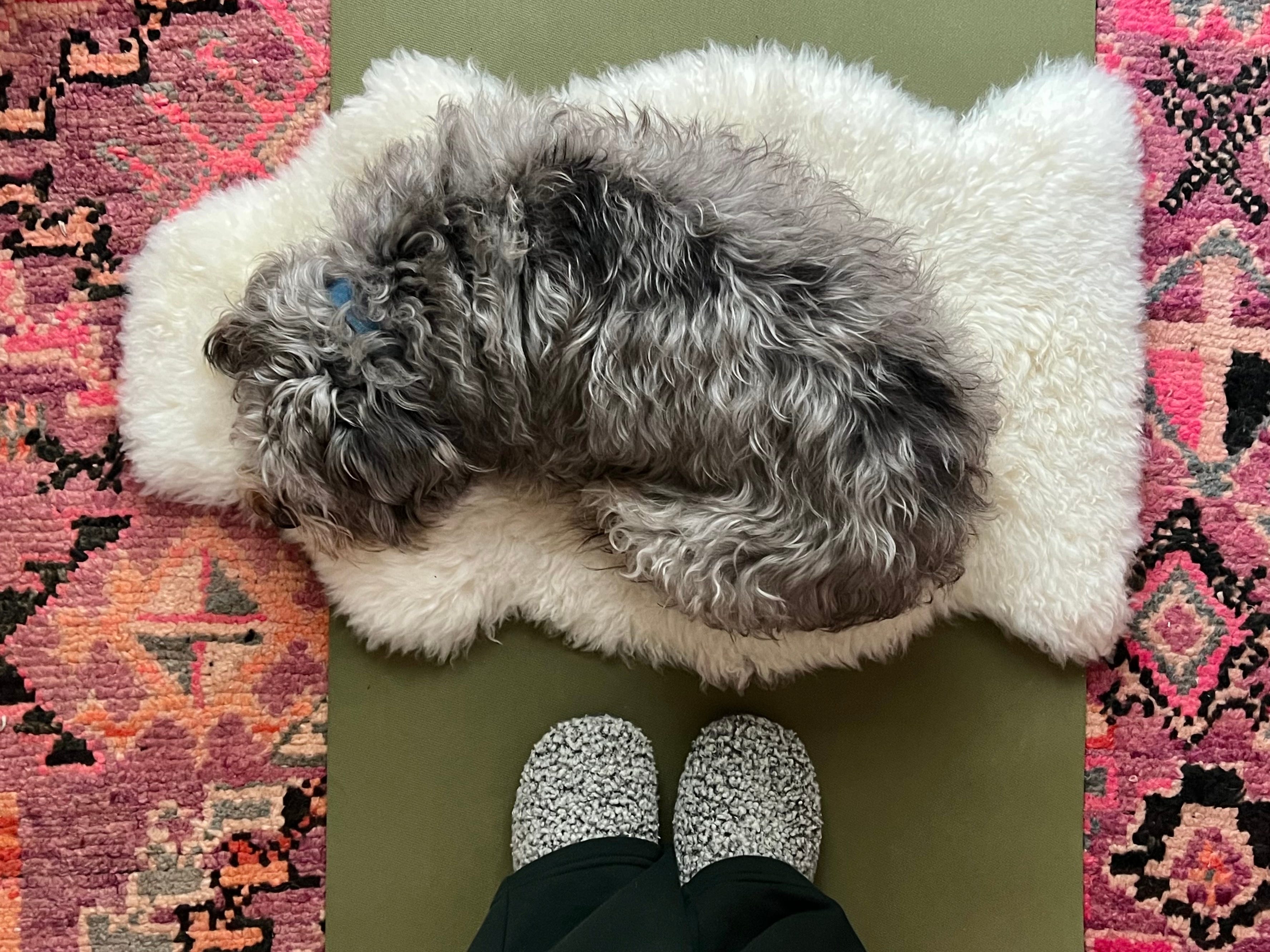
I have noticed a distinct correlation between my impulse to capture something with my iPhone’s camera and a lapse in my overall sense of curiosity. It has become my canary in the coal mine: when I no longer feel the urge to stop, capture, and examine, I know that I am moving through the world in a blunted and numbed state. This has been true for reading, as well. I’m ashamed to admit my progress with Wuthering Heights skidded to a near-halt in my last few weeks of the academic quarter as I hurriedly finished my last research papers and final projects. I finished it just a few days before Christmas. It isn’t a very large or particularly challenging book, and still I dragged my feet, continually putting off the pleasures of reading for the very mundane act of mere survival. Cooking, cleaning, my other job (the job I work for money, outside of my unpaid internship), and express nervous system repair took precedence over life’s pleasures.
This happens to me occasionally, and comes in waves more frequently since starting my graduate program. Each academic quarter brings a new wave as I push and overextend myself to the absolute limits of my capacity. Although I initially thought these “slumps” were a sort of depression, I’ve come to understand them as a form of severe burnout. I wouldn’t have come to this realization without the help of Blind Boy, who examines his own burnout often on his podcast, which is the only podcast I really listen to these days. It has been instrumental in helping me gain a deeper understanding of the mechanics of my own neurodivergence.
Autistic burnout can look and feel a lot like a depressive episode, especially if you aren’t used to seeing it through the frame of neurodivergence. It is a kind of numbness that isn’t always accompanied by despair, although that can occasionally be a part of it. I begin to lose interest in everything around me — for me, that is books, writing, creativity of all kinds. It’s precisely this kind of anhedonia that makes it so easy to self-diagnose as depression. I become forgetful and make mistakes that seem careless to others. I go through the motions on autopilot. Focus is slippery, dedication is nonexistent. I stumble through mornings, afternoons, and evenings in a haze, doing just enough to string my existence from one day to the next.
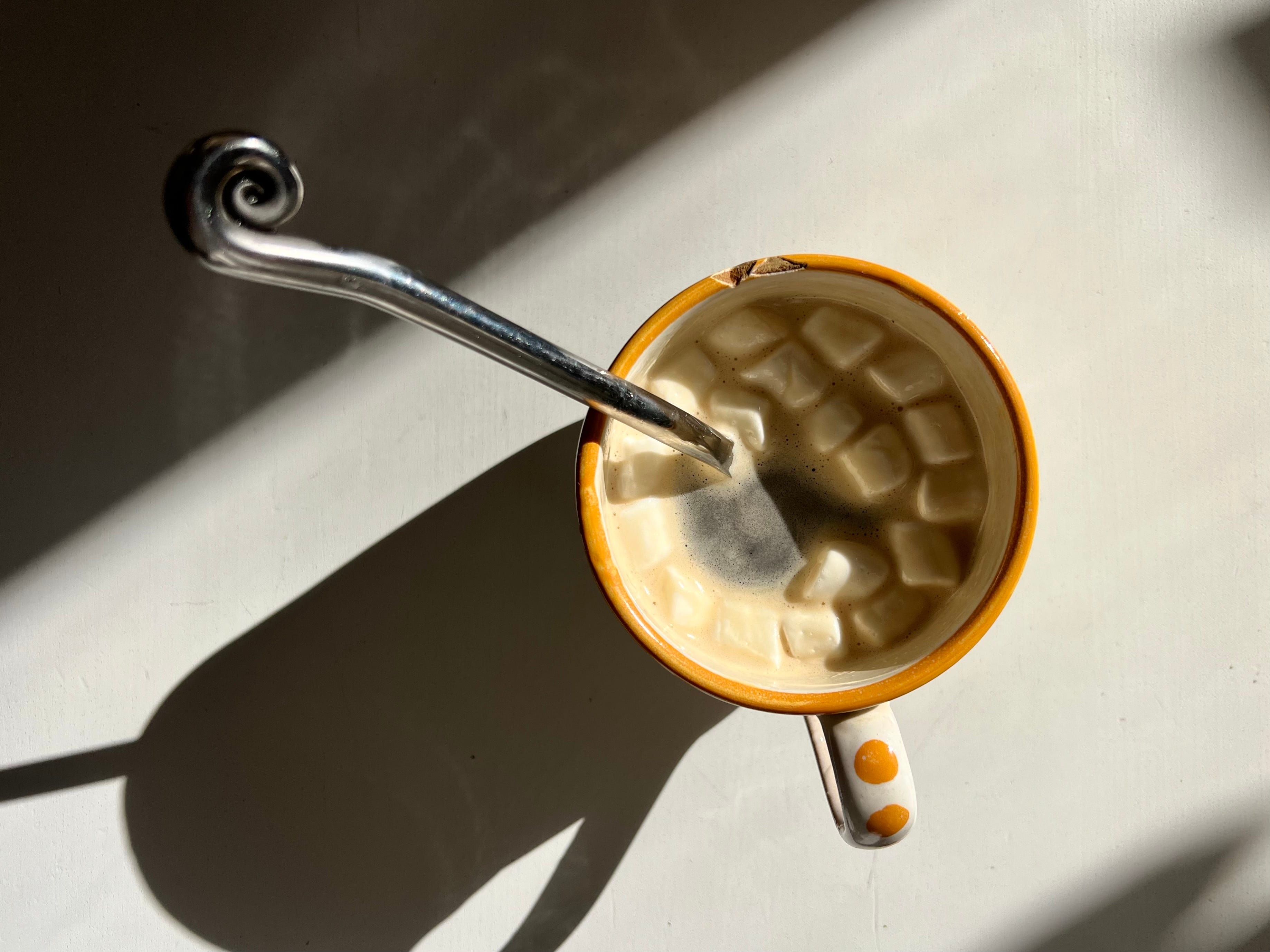
This letter is not solely about autistic burnout, but I found it important to start here because I’ve come to know it intimately, and because it helps contextualize the sacred pause, the titular concept I’d like to discuss here. It is something we all must partake in, neurodivergent or not, in order to continue living well. Neurodivergent folks are more sensitive to burnout because our processing is different. My experience of moving through the world is to be inundated by constant sensation: strong emotions, loud noises, cross talk, and bright lights are just a few things that I am sensitive to that can deplete me. It is a lot like running a large program like Photoshop on a Macbook air; space runs out quickly and causes the most basic functions to glitch and crash, making them nearly impossible to complete. I have significantly less capacity than most, and this is something I am still learning how to live with.
This is why, like clockwork, I begin pining for winter around the same time each year. It typically starts in September around my birthday, after nearly 3 months of dry, blazing wildfire heat and the kind of active social calendar that only summertime entails. The shift from summer to fall, then fall to winter, is always a welcome respite from life’s mad dash. It is supposed to be this way. It encourages a pause — one that affords us an opportunity to identify the discrepancies between how we currently live our lives and how we actually want to live them. You can’t decipher this without a pause. And by forgoing it you run the risk of working yourself into oblivion toward a goal you may realize you don’t even care all that much about.
According to numerology, 2025 was a 9 year. In the tarot, this coincides with the major arcana card of The Hermit, a card I have always felt a deep kinship with. I was born on September 9th, 1993. I am lousy with multiples of nine. The impulse I feel to turn inward, to seek solitude, and to reduce external input enough to hear my own inner dialogue is instinctual, almost feral. I need it in order to be myself. Collectively, this year was marked by tragedy, despair, and the intense upheaval of old systems. Nines are also endings — a breath of air before a new cycle begins. This entire year my body has been screaming at me to slow down, and I ignored it almost every time. I had a deadline to meet, a social obligation I couldn’t miss, a research paper looming. I spent nearly a year ignoring my instincts, my nature, my rhythms. It’s no wonder I am ending 2025 feeling as I do now: depleted, in physical pain, my hope frayed but not entirely obliterated.
I learned my limits this year. I learned what I am capable of. I learned what I value, how I long to spend my days, what energizes me, and what depletes me. I shed skins I didn’t know I had, reduced myself to the most essential aspects of my being. What I let go of were mostly scripts I inherited from years and years of sociocultural influence, of navigating a world that was not built for me on so many different levels. I see this not as defeat, but as a return to myself.
I started reading Sophie Strand’s new book, The Body is a Doorway, after experiencing my own chronic pain. Her prose is dazzling, and I love how she interfaces with the world around her. She describes her chronic illness as something that forced her to return to her body after years of disconnection and survival. I feel similarly, as I continue to wake up sore, as pain regularly radiates throughout my neck, shoulders, and back. There is no ignoring it. There is nowhere else to run, because you are no longer physically capable of running. You must sit with yourself and the spectacular burdens of being a fragile, finite human. In order to heal, we need rest. Otherwise, much like bone, what’s broken sets incorrectly, catalyzing a series of adaptations within the ecosystems our bodies.
“Survival mechanisms save us in the moment. They are badly built bridges that support one brief, harrowing trip. But they cannot be used again and again, indefinitely. The problem becomes when these survival mechanisms outlive their usefulness.”
— Sophie Strand, The Body is a Doorway
Continuing when we no longer have the energy to do so is an unsustainable survival mechanism, one that I’ve employed for the better half of this year. Like so many of us, I’ve been sprinting since the starting pistol fire of 2025. If we aren’t careful, there won’t be much left of us.
To deplete ourselves would be a tragedy, because I want to do so much in the new year, and I’m sure you do too. I want to write more. I want to read. I want to draw and paint. I want to play my piano and strum my guitar. I long to flex those creative muscles and rekindle my dormant curiosity. I can feel it re-emerging now, which is where this letter came from. But I worry the start of a new year and another academic quarter will snuff it out prematurely before I’ve had the chance to enjoy it. And so my first task of 2026 is to figure out how I might abate this. I have some ideas, ones I might share in a future newsletter. But for now they marinate, and I must rest.
P.S. — Somewhere between October and now I hit 700 subscribers, and so I want to extend a massive thank you to everyone who has read, subscribed, and supported this little newsletter, both this year and in years prior. I’m so grateful. It gives me hope.
I hope everyone has a safe and restorative New Year’s Eve, and that you are able spend the first day of the new year doing something you love. Until next year. x
Thank you for writing this! ❤️ I relate to so much of it—especially this part:
“Neurodivergent folks are more sensitive to burnout because our processing is different. My experience of moving through the world is to be inundated by constant sensation: strong emotions, loud noises, cross talk, and bright lights are just a few things that I am sensitive to that can deplete me.”
My sensitivity often makes me feel frantic and I have looooved knitting alongside you and our little group because it has become another way (like reading) for me to slow everything down.