

Inside me there are two wolves.
My thoughts on "Wuthering Heights."
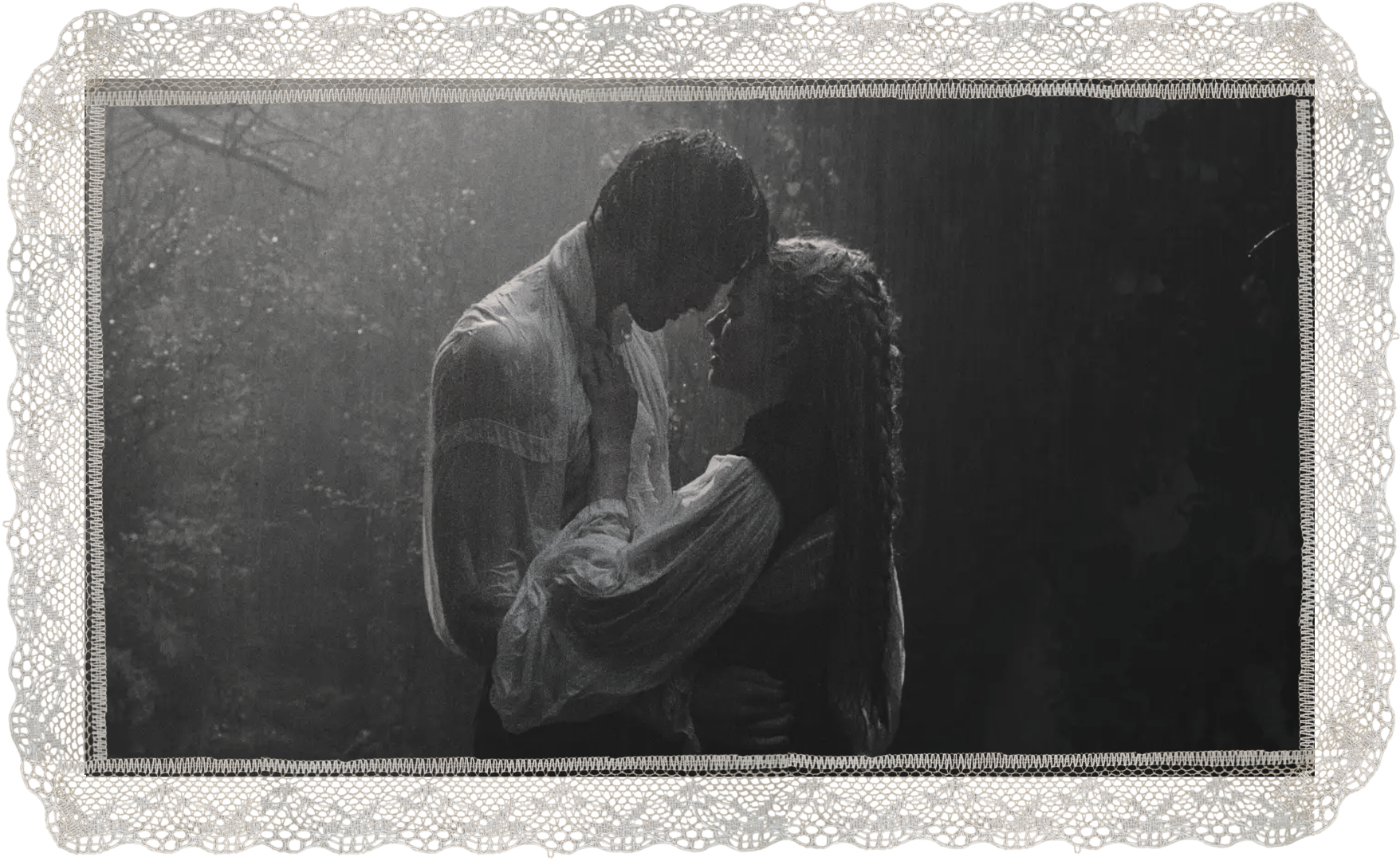
Inside me there are two wolves: one with a fervent love for classic literature, especially the Brontës, who desperately wanted a film that did this incredible, complex story justice. The other is simply thrilled at the prospect of watching a gold-toothed, cravat-clad Jacob Elordi on his hands and knees professing his undying love for Cathy. Neither is wrong, and both can be true.
Haley Larson, who writes Closely Reading, recently observed that the press surrounding “Wuthering Heights” was similar to the press surrounding the initial release of the book itself. I very much like this observation. Wuthering Heights is a novel that transcends genre, and while most would agree it lives primarily within the gothic literature tradition, it has whispers of romanticism, bildungsroman, and tragedy. Readers were unsure what to make of the novel upon its release, much like people don’t know what to make of Emerald Fennell’s film now. Since watching the film last weekend I’ve found myself swinging back and forth between binaries and attempting to puzzle out whether I loved it or hated it. But the answer to that question is both. The film pissed me off, yes. But it also delighted and thrilled me.
What I did not like.
The entire second half of the novel is left out. This is common in many adaptations, but I’m tired of it because it leaves out the redemption arc for everyone caught in the crosshairs of Cathy and Heathcliff’s tumultuous relationship. Cathy dies in childbirth in the book. Her child, also confusingly named Cathy, has a brief fling with Heathcliff and Isabella’s child, a pale, sickly, tantrum-y child named Linton Heathcliff, which concludes with his death. Cathy II is then reunited with her cousin Hareton (yet another character left on the cutting room floor, along with the hot-goss-loving Mr. Lockwood) and they fall in love.
The second half of the novel is pivotal, because it exceptionally illustrates the destruction of generational trauma. Cathy ultimately only married Edgar for security. Heathcliff, in response, married Edgar’s sister Isabella out of spite. Their respective children then bear the weight of these hasty decisions that now make up their shared reality, one they didn’t have any say in at all. After Cathy II and Hareton unite (and the original Heathcliff dies), they inherit everything, both material and immaterial. This moment signifies their opportunity to break with the inherited trauma and start anew. Without this ending, Fennell has made a love story—a dazzling one yes, but a love story nonetheless—rather than a film about what trauma and obsessive love destroy and leave behind.
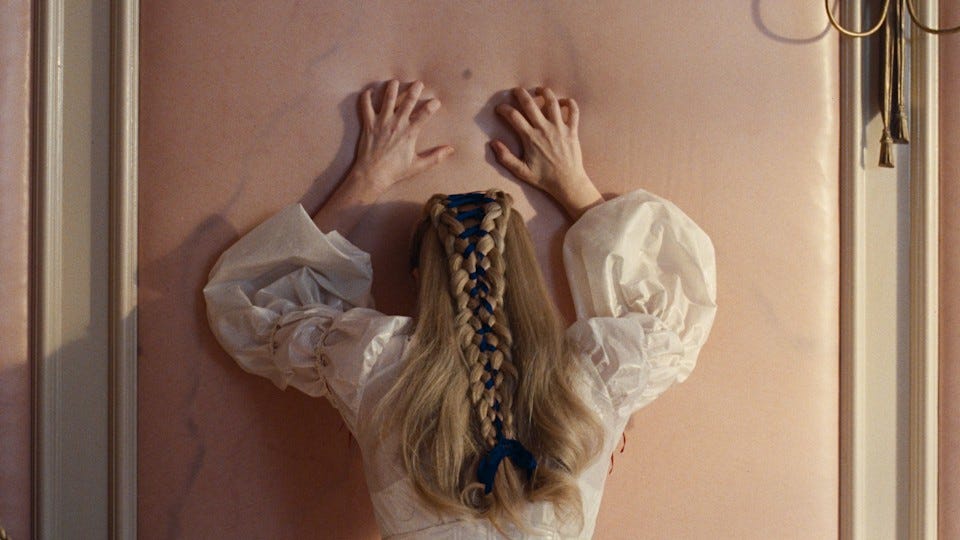
Also, Heathcliff wasn’t white. This is perhaps my primary criticism of the film. It glosses over one of the most important themes of the novel: race, and the consequential trauma associated with a lifetime of being othered and looked down upon. Heathcliff became a successful man out of pure vengeance. His ethnicity in the book is only somewhat ambiguous, which is most likely why Fennell was able to take the creative liberties she took in casting Jacob Elordi without having to justify herself. But, similar to Bertha’s portrayal in Jane Eyre, he is explicitly othered several times throughout the novel. Heathcliff is described as having dark skin and black hair, is problematically referred to as a “gipsy” and an “imp of Satan,” with eyes “full of black fire.” Heathcliff’s othering was the impetus for the entire plot. The decision to remove this critical aspect of the novel left a gaping hole in the narrative structure of the film, one that had to be filled somehow—or with someone. With whom, you ask?
What I was (reluctantly) okay with.
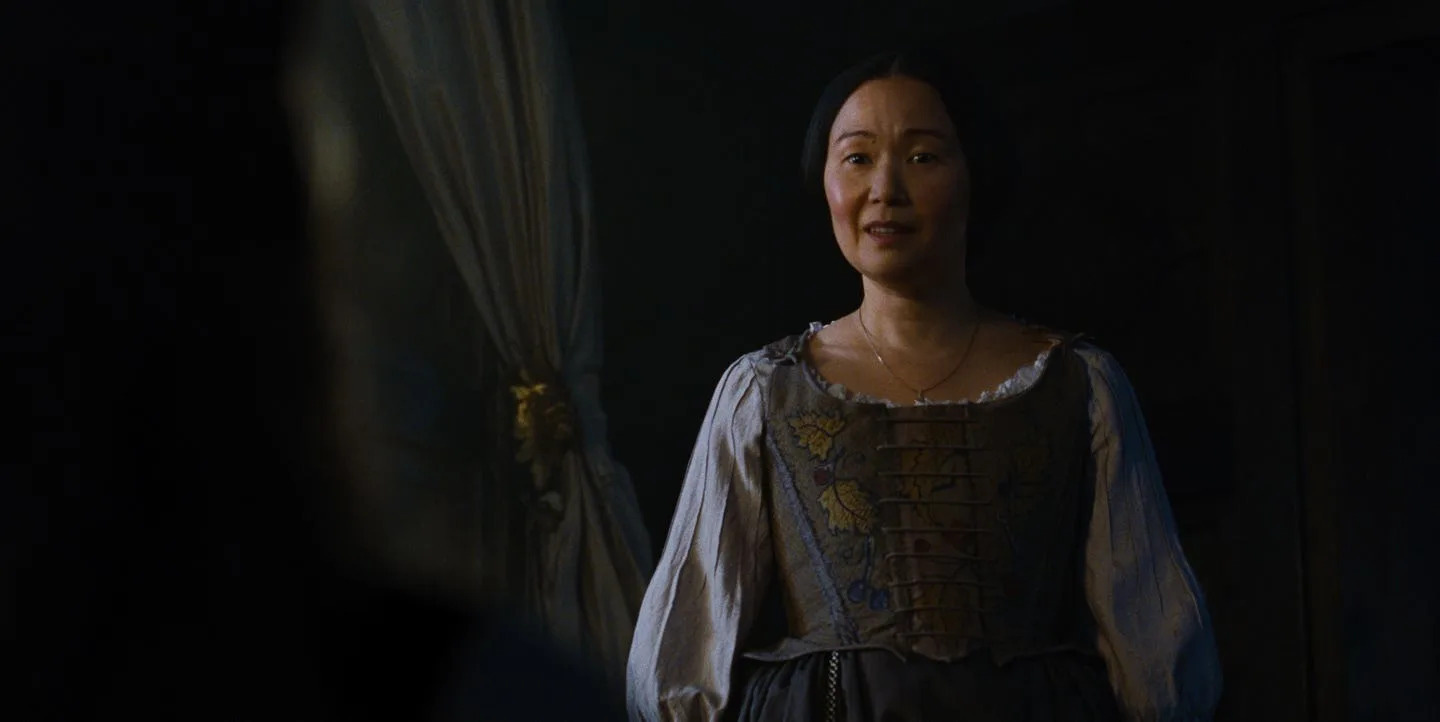
Nelly Dean, of course, brilliantly portrayed by Hong Chau. Far from villainous in the book (more of a meddler and an unreliable narrator than anything), Nelly becomes the force that pushes the plot forward where Heathcliff once was. Her character bears the burden of a lifetime of being othered as an “illegitimate child of a lord.” This reframing works far better than I expected, and Hong Chau is incredible in the role. Still, it doesn’t entirely fill the hole left by flattening Heathcliff’s racial identity, it merely redistributes the wound rather than addressing it.
What I loved.
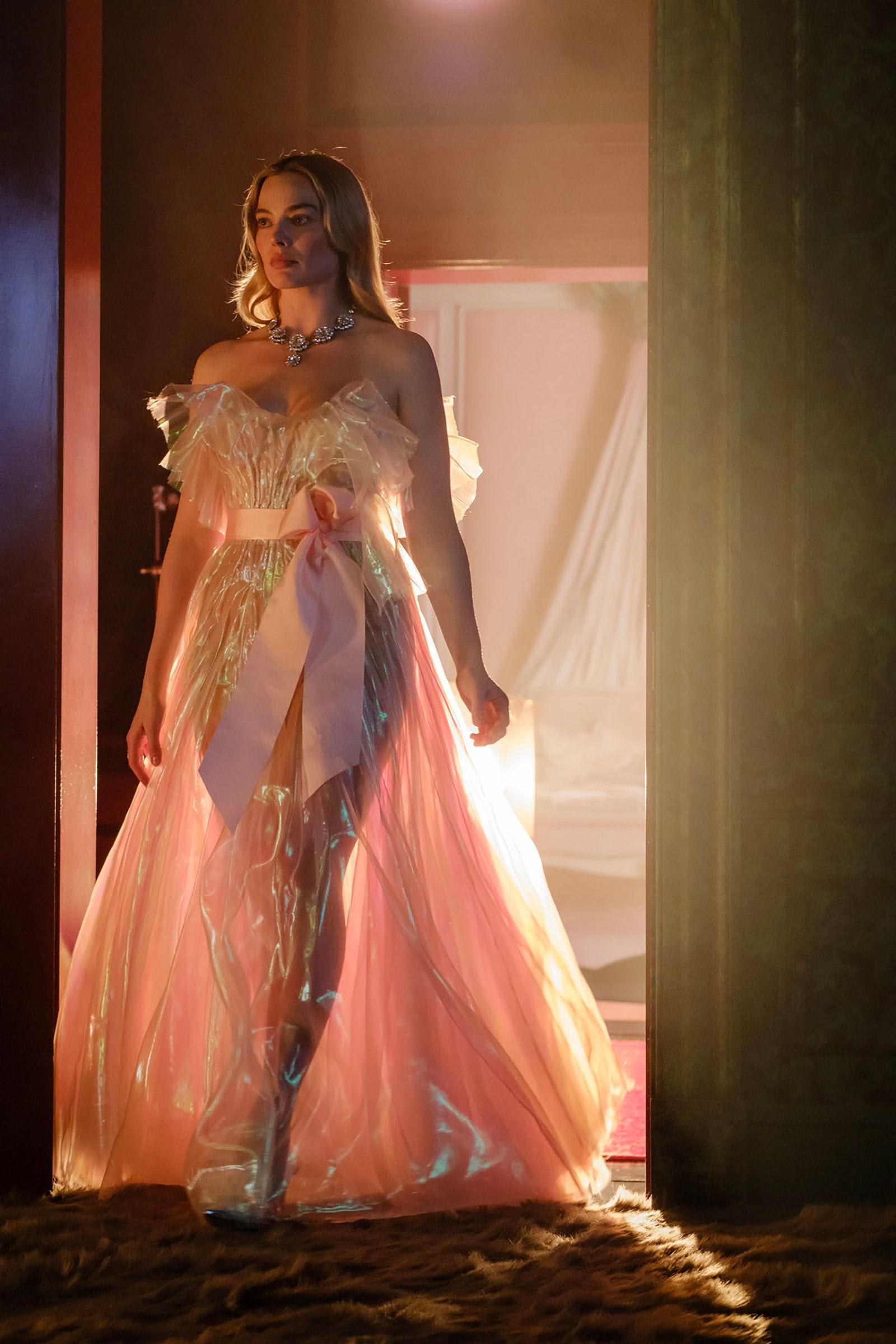
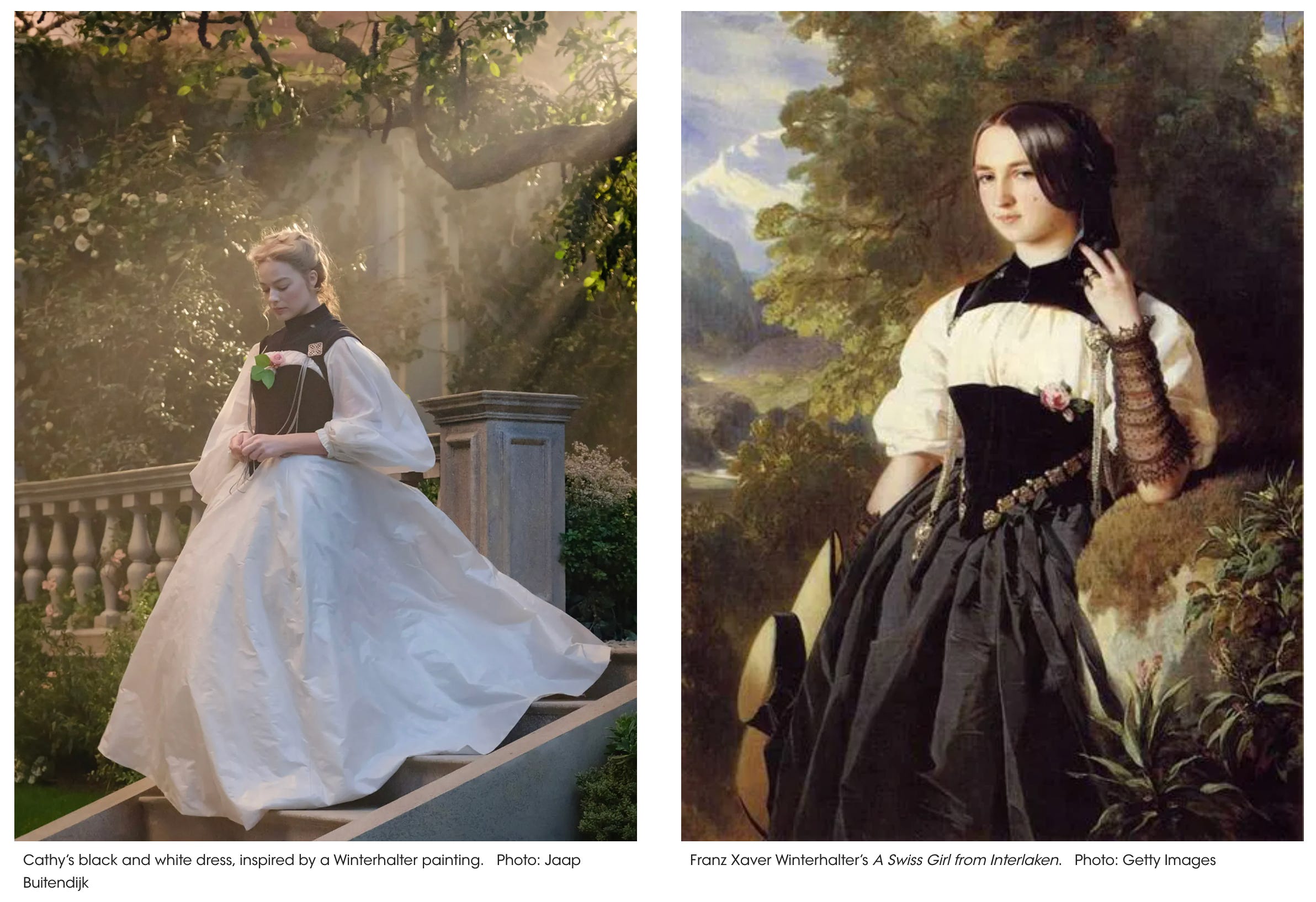
My queen Jacqueline Durran, I could never hate you. Durran has proven to us throughout her career that she clearly has range. We know she can deliver historical accuracy because we saw it in all of Joe Wright’s heavy-hitters: Pride & Prejudice (2005), Atonement (2007), and Anna Karenina (2012). We saw it in Little Women (2019), and even Barbie (2023). But here she has given us a modern spectacle wrapped in the delicate threads of a period drama, and that is no easy feat. Durran is that girl, and she will always be that girl. She outpaced her own legacy, proving that she isn’t just a master at producing something historically accurate but that she can push the limitations of the medium even further. I thought all of the costumes were beautiful, daring, and original, and I love that many of them were inspired by art history, mixing elements of baroque, rococo, and neoclassicism.
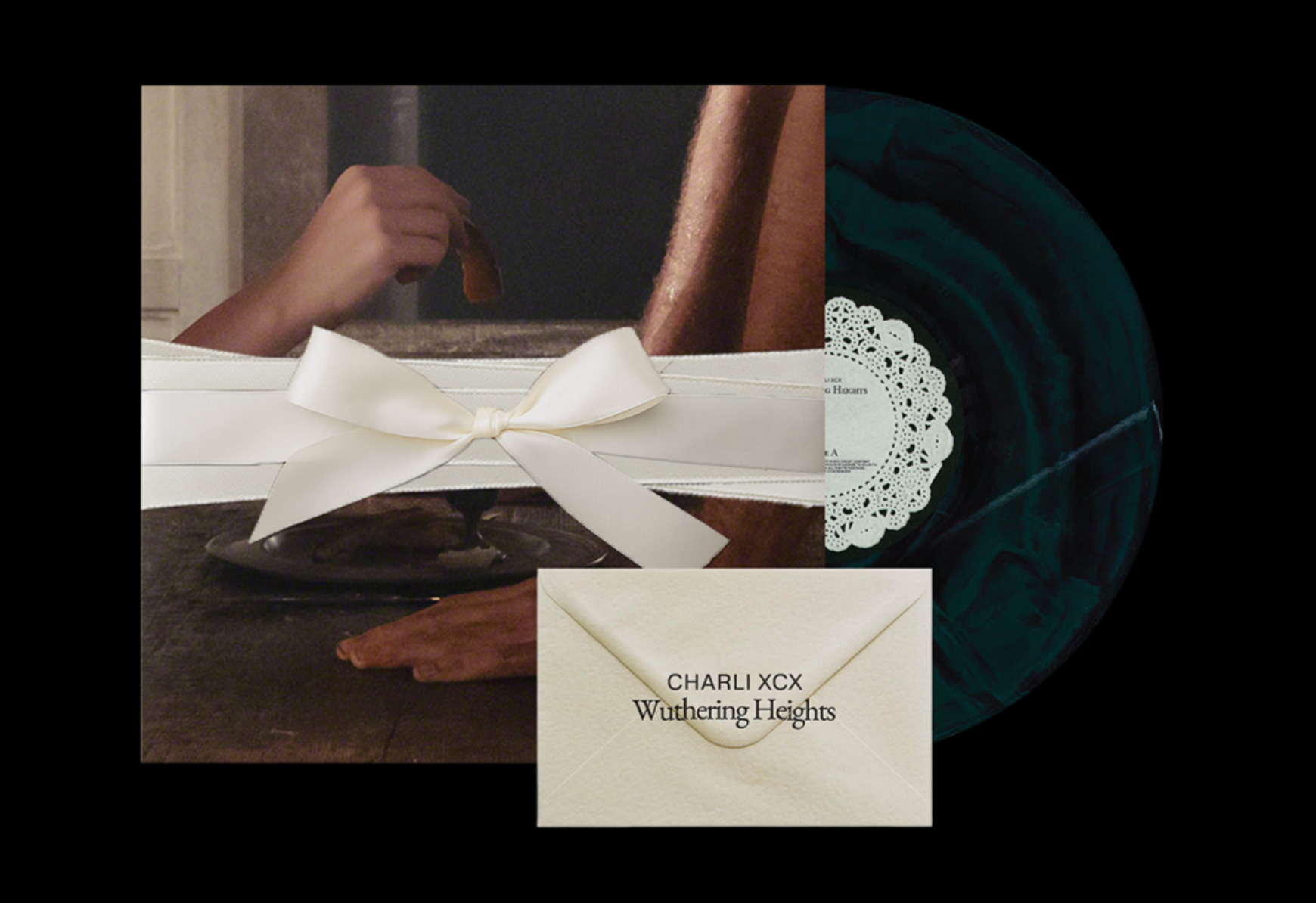
Also, Charli xcx’s Wuthering Heights album is insane. I am a massive Charli xcx fan. This comes with the territory of being a millennial who grew up on Tumblr. Much like Durran, Charli is a visionary who consistently pushes herself and her creativity into new territories, giving people things they didn’t even know they wanted. The legendary John Cale contributed to this album, and so did Sky Ferreira, yet another millennial icon. I cannot stop listening to Dying for You, a sparkling and frenetic record-skip of a song. I have no notes here. Charli delivered, as always. I am not surprised.
So where does that leave me?
Somewhere in the middle of the moors, I suppose. Fennell created something bold and strange and genuinely difficult to categorize, which is, ironically, exactly what Brontë did. I just wish she had trusted the full weight and complexity of the source material: the race, the wreckage, the second generation picking up the pieces of their idiotic forebears. But I’ll still be listening to Charli’s album on repeat, thinking about Jacqueline Durran’s Mugler-inspired iridescent costume and Jacob Elordi’s gold earring for the foreseeable future. It wasn’t Wuthering Heights, it was “Wuthering Heights,” and I suppose I’ve made peace with that. The film was a campy, glittering, bodice-ripping spectacle full of beautiful people, costumes, and sets. Much like spoiling your dinner with movie theater popcorn and candy, the film had little nutritional value, sure—but boy, was it a pleasure to devour. And you are full, are you not?